

ILes Sérums · Day and Night
Serums for Day and Night
Two anhydrous formulas built on the same active core, in the two textures a day actually asks for.
The difference between morning and evening is not a different chemistry. It is a different vehicle. A facial oil that presses into damp skin and disappears under the day; a solid balm that stays where you put it and works through the night.
Both carry 1% bakuchiol, CoQ10, stabilised vitamin C and the four-mushroom M-Veil complex. Which one you reach for is a question of texture and of what your skin is doing that week — not of potency.


M-Veil™
Resilience Reset: Antioxidant Skincare Duo
- Menopause-Informed Skincare
- 24/7 Active Ritual
- M-Veil™ Mushroom Complex
$144USD

M-Veil™
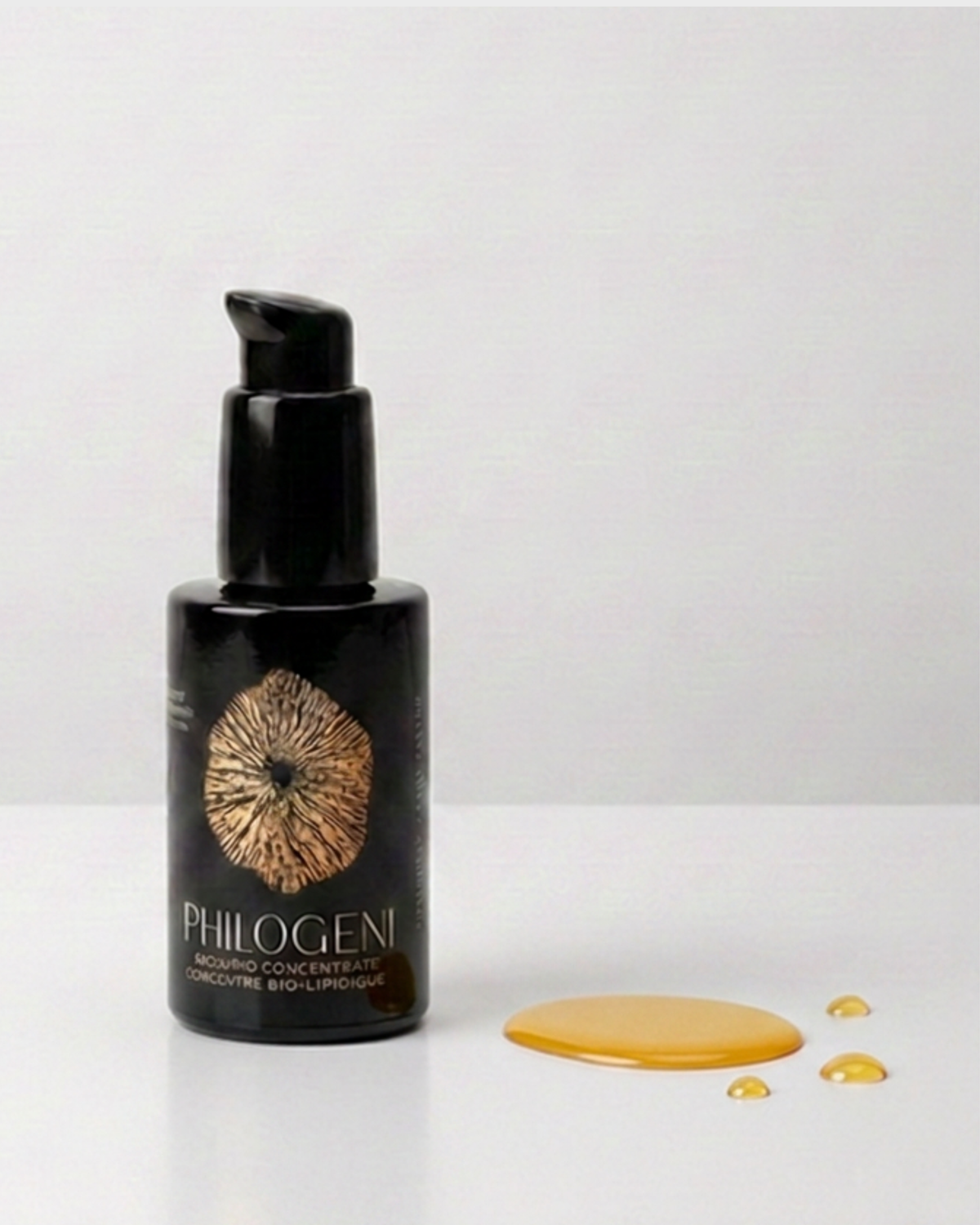
M-Veil™ Antioxidant Serum: Bio-Lipid Facial Oil
- Menopause-Informed Skincare
- Gentle Retinol Alternative
- Deep Repair
$118USD
IILe Matin · AM
Morning wants slip, not weight.
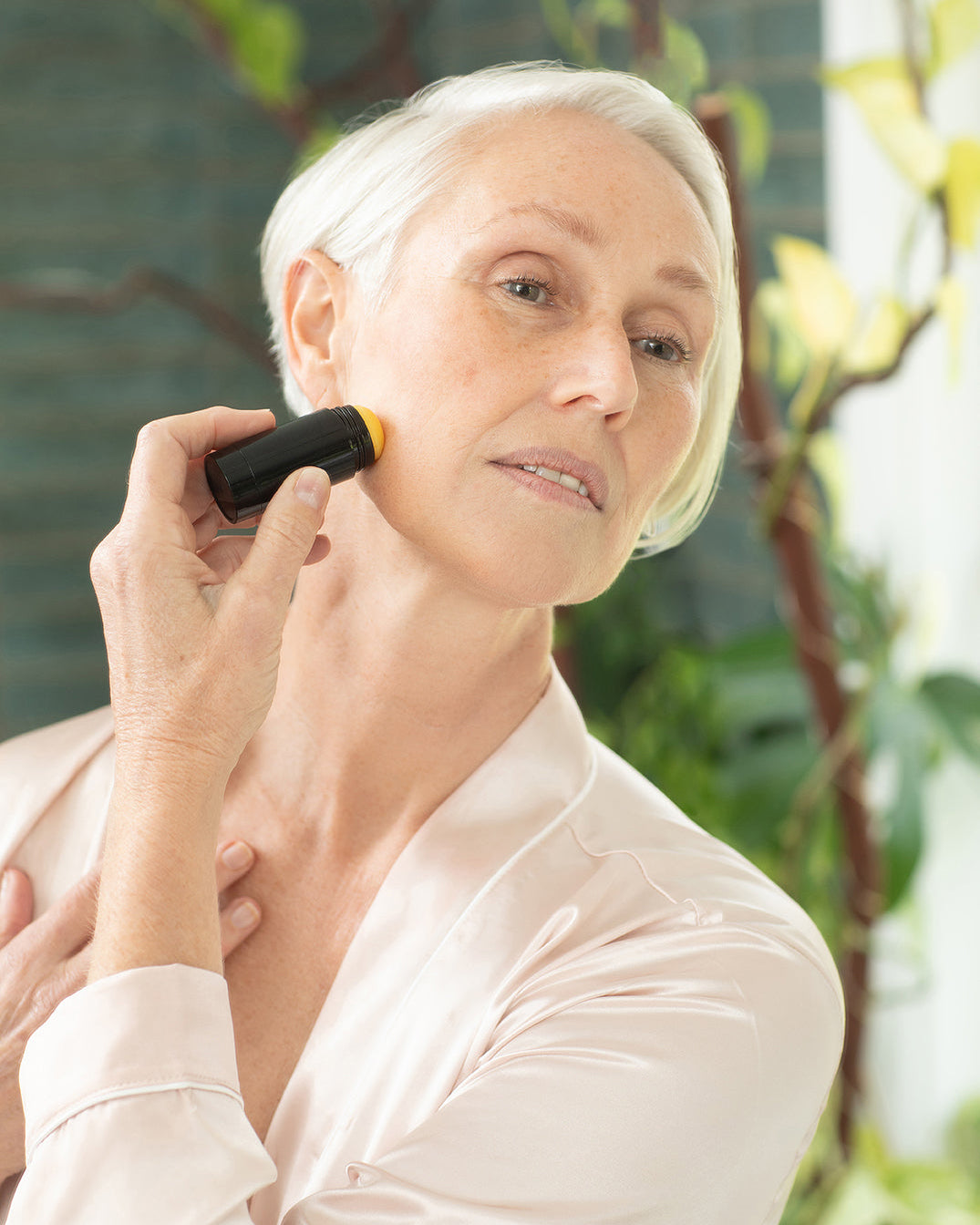
Three to five drops of the Antioxidant Serum into skin still damp from washing. Press, do not rub — the water is doing half the work, and the oil is there to hold it in rather than to sit on top of it.
The Resilience Balm goes over the top only where the day is hardest: the outer cheek, the jaw, anywhere that feels tight by mid-morning. It is a stick, so it is also the one that travels.
IIILe Soir · PM
Night is when the lipids go back.
Barrier repair runs on a circadian clock, and it runs fastest while you sleep. That is the window the evening application is aimed at: a heavier hand with the serum, the balm over the whole face rather than in patches.
Bakuchiol does its work here too, without the photosensitivity that forces retinol into the same slot. Nothing in either formula asks you to build tolerance.
IVFurther Reading
Read all entriesWhy the routine is two steps, not seven.
-
ceramides
Why Your Moisturizer Stopped Working in Perimenopause
The reason a cream that worked for a decade stopped working in a year — and why adding more of it does not close the gap.
-
dry skin
Why Hyaluronic Acid Might Be Making Your Skin Drier, Not Less
Why a humectant can leave skin drier than it found it, and what an anhydrous formula is doing instead.
-
antioxidants
Why Your Skin Looks Tired No Matter How Much You Sleep
Dullness is usually an antioxidant and circulation story rather than a sleep one. What CoQ10 and vitamin C are doing in the evening formula.


